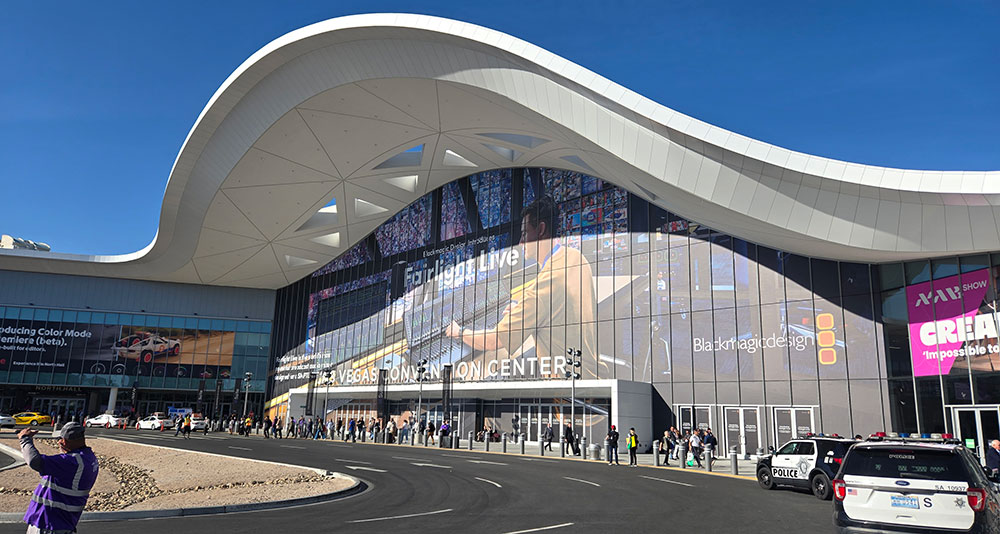
I spent Sunday and Monday at the NAB conference in Las Vegas. (That is how I recommend seeing it, the conference is too big to see it all in one day, but four days in Vegas can drain your soul;) I saw all sorts of interesting things in the exhibition halls, many of which I detailed in my earlier article. I attended alone, instead as part of a larger team, but after 20 years of trade shows, I am constantly running into familiar faces, some of whom I only see at the show. There were apparently 58K other people there, but nearly half were first time attenders. I spent most of my time in North Hall, which is focused on software applications, and the computers that run them. West Hall is mostly enterprise and cloud based workflows, and Central Hall is where all of the production gear and other hardware is on display.
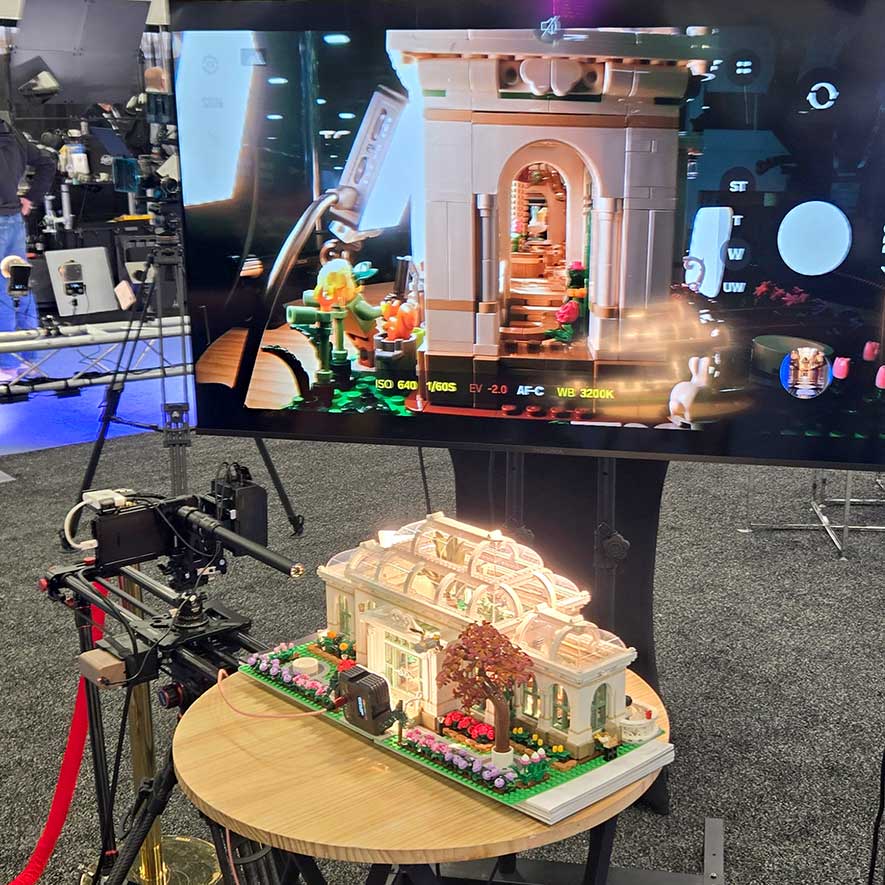 Whenever I attend NAB, I have a number of things that I know I want to see, having researched ahead of time. But I also deliberately wander the booths, at least in the areas that seem relevant, to see what else I can discover, that I didn’t even know to look for. That is how I have found a variety of interesting things in the past. This year I stumbled on a self illuminated probe lens, which can be attached to a cell phone, at the back of Central Hall. This is by no means in my normal realm or activity, since I rarely even shoot photographs with my phone, preferring my DSLR. But Neewer was demonstrating it, in conjunction with their camera slider and lighting gear, in my exact potential use case, capturing the inside of a detailed Lego structure. Anyone who has seen my Grounds of Freedom series can imagine how I will use something like that. I was disappointed to discover that while it is compatible with the Galaxy S24 Ultra, I have the regular S24. I will rectify that issue at some point and get a phone I can use with that probe lens, as well as some of the other lenses they offer.
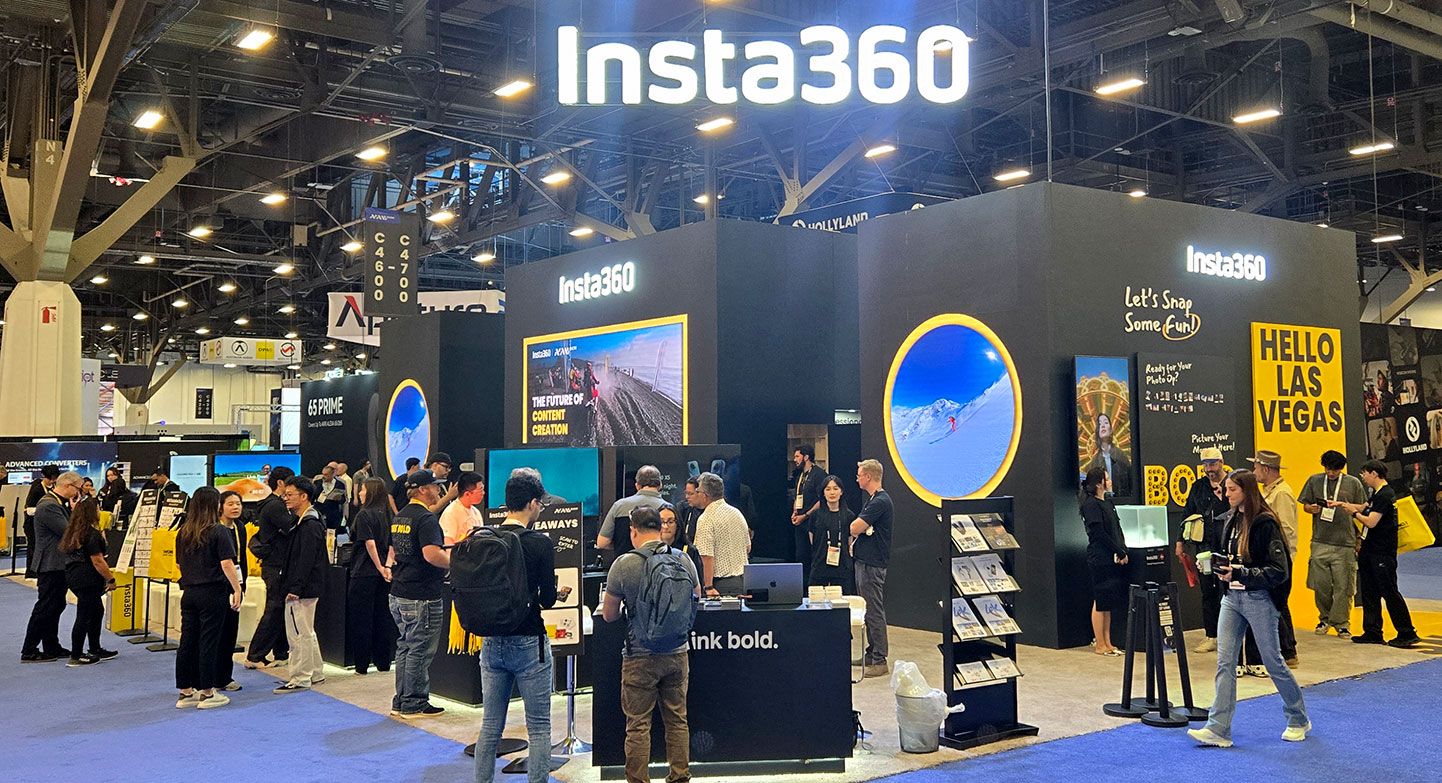 I was given a tour of the Insta360 booth, where I saw their X-Series 360 cameras, as well as a selection of more traditional action cameras. They also announced a new wireless microphone, with dedicated receiver, but it can also connect directly to their cameras, via Bluetooth. Multiple microphones are supported with a dedicated channels of recording. I also saw a sneak peak of their upcoming Luma stabilized camera, to compete with the DJI Pocket Cam???, which I did see a lot of, in use at the show. (Speaking of DJI, they were showing off all sorts of Ronin stabilizer options at the DJI booth, but no sign of any drones, presumably as a result of the new rules and bans that have been going into effect.) Insta360 seems to have partnered with Antigravity, as a domestic manufacturer for A1, their take on drones, as a 360 recording device, with FPV type control. I got the opportunity to try it out, but the control mechanism was very different from the drones and helicopters I have flown in the past, so I was not able to get it to respond the way I was expecting. I believe that a better understanding of the design, or using it in a different flight mode, would have given me better results. I do like the concept, in that if you are going to have a 360 camera, a drone is the way to do it, so that you don’t have any support structure in the shot, even as simple as a pole. And you can frame your shot later, separate from the flying experience, so you are less likely to ‘miss the shot’ due to a piloting error, but there is a level of visual quality being sacrificed in order to take that approach.
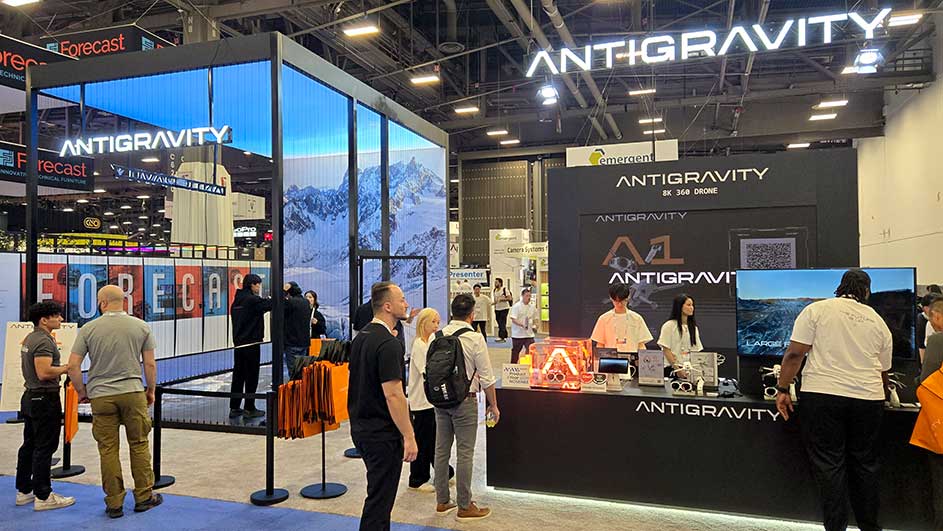 10 years ago I was asked to design a way to record 360 video of a SWAT team clearing a building, with the user having the VR perspective of someone in the stack of officers engaged in the action. My two ideas were a tracked robot with a 6’ pole, or to hang the ‘camera,’ which would have been a cube array back then, from an overhead track, which would hope to hide in the darkness of the ceiling, or be painted out in post. At no point did “just fly the camera around and hover where you want it, enter my mind, because quadcopter drones didn’t exist yet, and hanging the camera from a small helo would have the same paint out problem as the track. These new 360 drones could get that shot easily, with no extra work. It really is amazing where technology has taken us in such a short time.
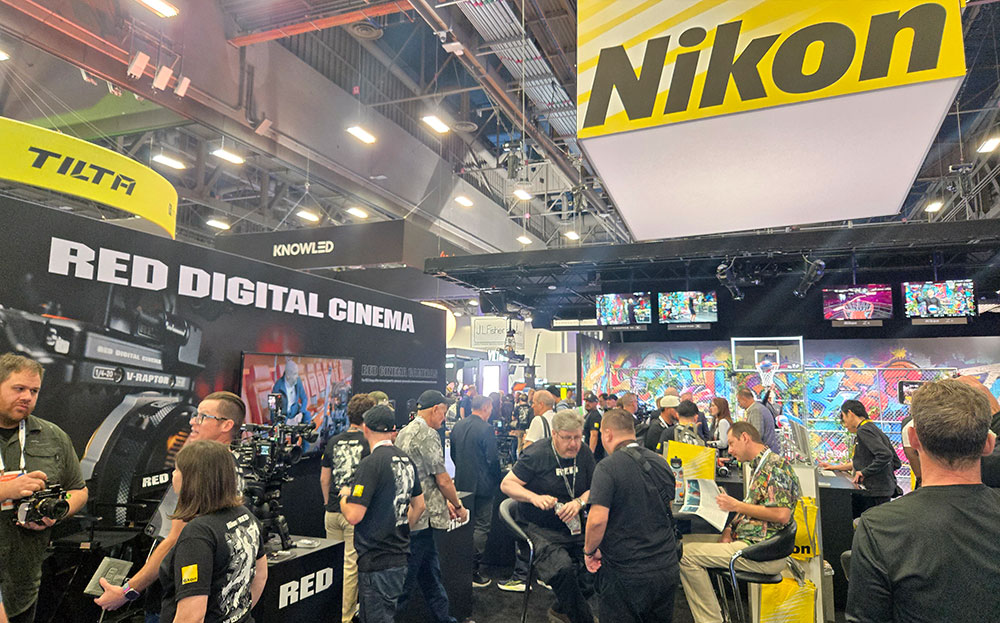 Red camera company was acquired by Nikon two years ago now, and they had a joint booth at the show, where they were recording and broadcasting people shooting hoops in their booth.
 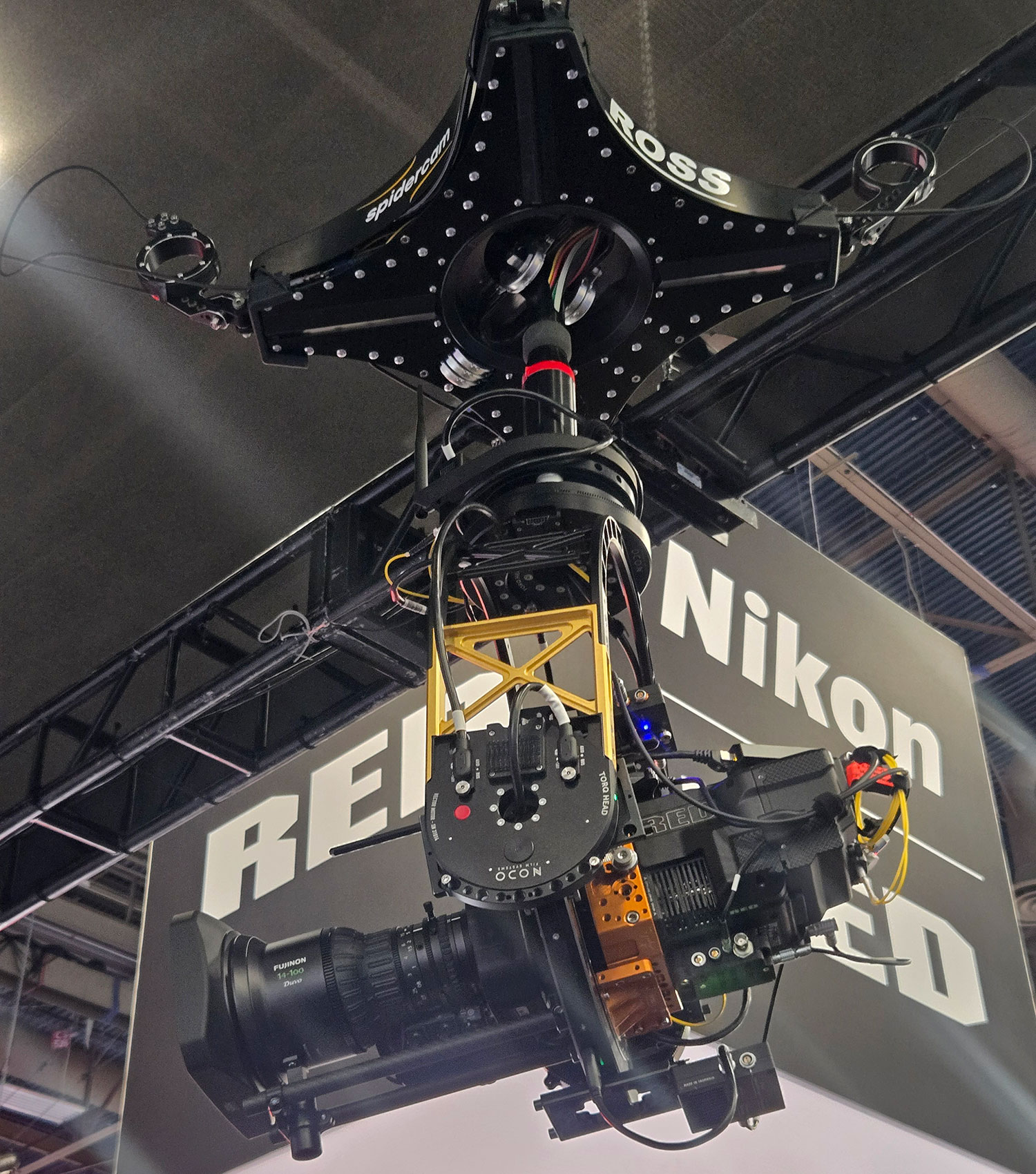 They don’t have any brand new cameras at the show, but they have been fleshing out their live workflows, with a Red Broadcast box, and integration with 3rd party slow-motion replay systems, allowing the high frame rates available in the Red cameras, to be utilized for sports broadcasting. They also have a way of shooting and live-streaming content for Apple Vision Pro devices, from cameras fitted with Canon’s VR180 stereo lenses. I did see more AVP headsets integrated into booth demos than I expected, so it seems like the ecosystem for those is finally coming to market, and it will be interesting to see where that goes.
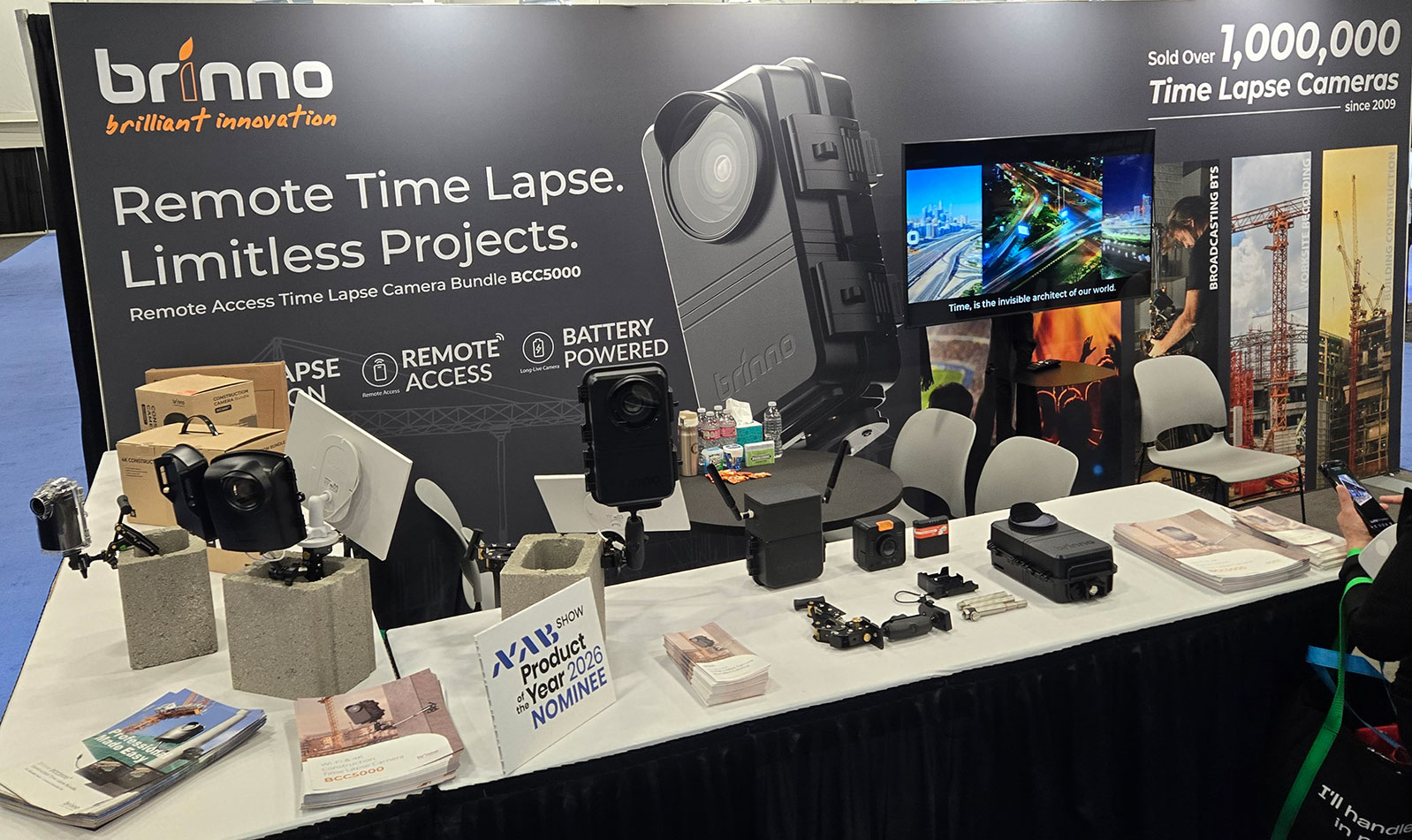 Another interesting find was Brinno, which isn’t necessarily new, but I have never heard of. They make time lapse cameras. I use GoPros with battery banks to make all-day time lapses, but it would make sense that better options are available. I was shocked when they said the batteries lasted 6-9 months, and their base model was only $300, so that is very do-able. This isn’t something flashy and new, but a useful tool for specific projects.
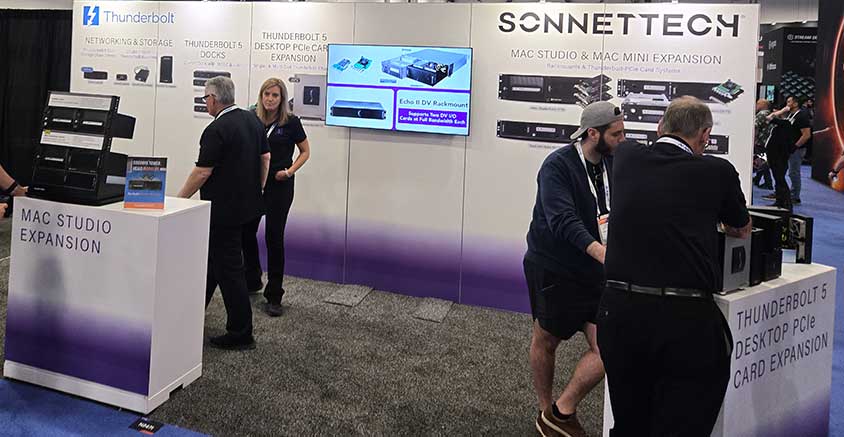 Up in North Hall, I had an extensive conversation with Greg LaPorte of Sonnettech about the demise of the MacPro, and how products like his Echo Thunderbolt expansion boxes are now once again the only way to use PCIe cards with new Mac computers. That limitation really caps out the potential expandability of Mac computers, but if you must be on MacOS, and you need high performance IO, Sonnettech is the place to go.
Softron was showing off browser control of their Movie Recorder 5 product. That booth is also where I first heard about ProRes over 2110, which is one more way of compressing video for IP video streaming. Currently supported on the BMD Immersive camera to fit stereo 8K x 8K images over a 100GbE link, ProRes over 2110 may become more widely supported, as one more option in the complex landscape of IP video.
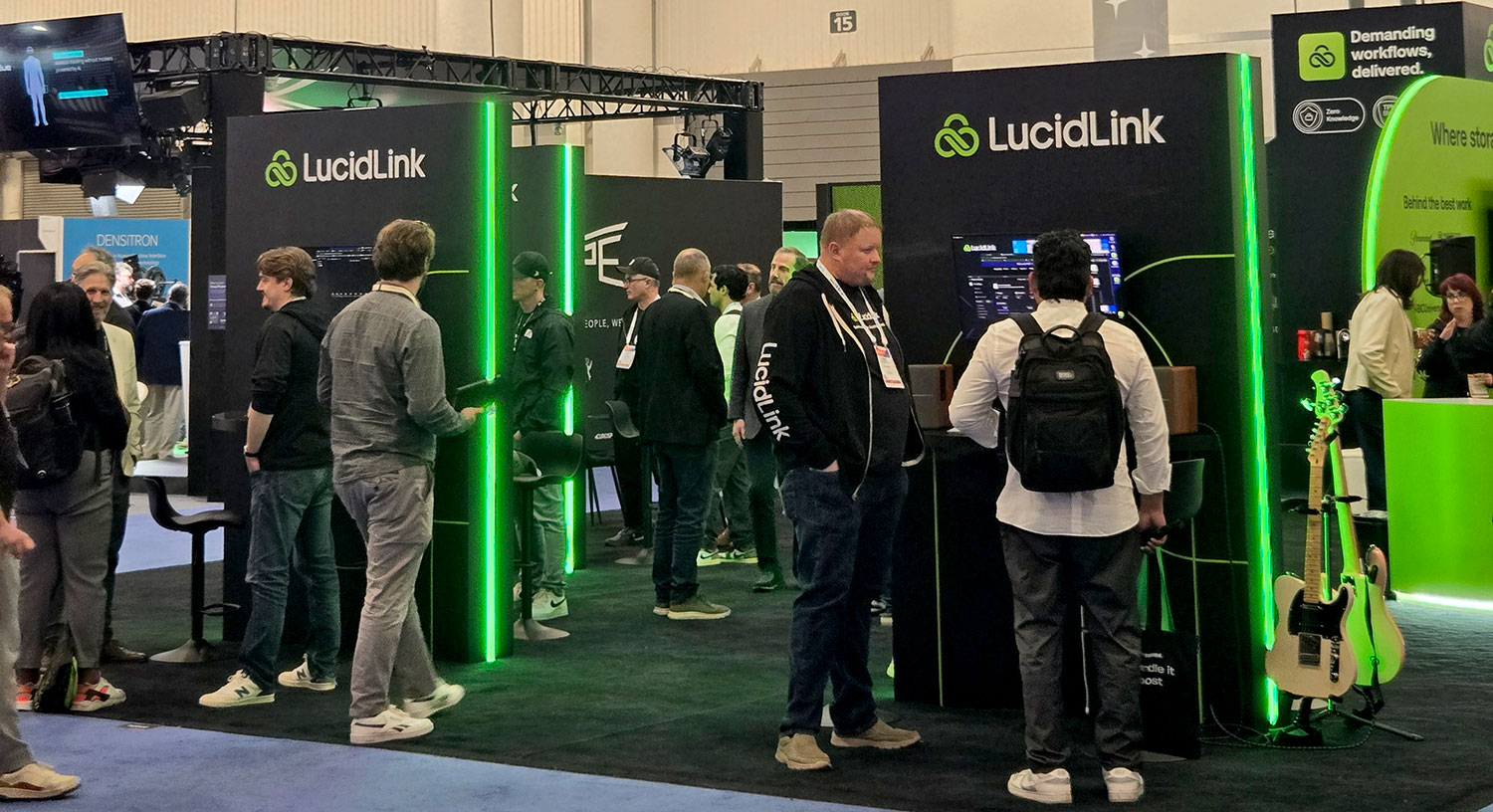 I was able to sit down with Richard Yu, Chief Product Officer at Lucid Link, to discuss how LucidLink and their product has grown. With over 100K users, they have been focusing on adding features that appeal to larger organizations, like more detailed administration and security options, integration into larger existing ecosystems and workflows. One big piece of that, which was recently announced, is their LucidLink Connect functionality. This allows users to experience most of the benefits of LucidLink’s block level file streaming technology, with their existing cloud based assets. That is an issue I struggled with, when testing LucidLink a few years ago. I put 100GB of assets in the cloud, and when I wanted to run some cloud based processing on the files, I had to re-upload them to a different S3 compatible service. With LucidLink Connect, you can have a large library of assets stored in S3, utilize cloud based workflow tools on them, and stream them to your local workstation via Lucid’s application and functionality. Guest Access allows you to share a selection of assets with an outside party, without having to re-upload or make a duplicate copy. And their Team Caching option is currently limited to Enterprise customers, but allows multiple users on the same network to share cached files, so once one user has downloaded a file from the cloud, other users on that local network can access it directly from that cache without downloading or replicating it again. So they have been actively addressing most of the pain points I encountered when I tried out LucidLink a couple years ago, so it might be time to give it another shot, as soon as the appropriate project comes down my pipeline.
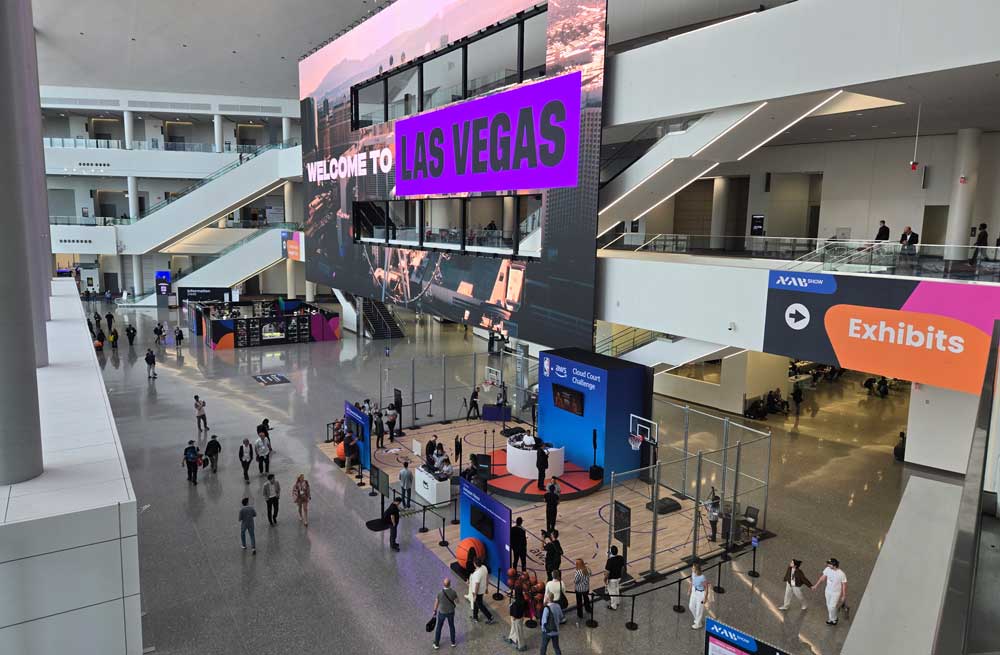 So that was my two days in Vegas. I missed last year’s NAB, because of a project I was working on, so it was good to reconnect with a variety of people I hadn’t seen in a long time. Tradeshows can be a source of all sorts of information and inspiration, and lead to new connections. NAB and Adobe MAX are the only two I attend regularly at this point, but I highly recommend them to people who are early in their careers, and still exploring, and NAB is a good choice since it doesn’t cost much to attend. I believe this was my 20th NAB, and hopefully I will have many more adventures there in the future.
Totally agree, it’s just overwhelming to try and take everything in. I found splitting my time between keynotes and specific vendor booths was the most effective way to manage it.