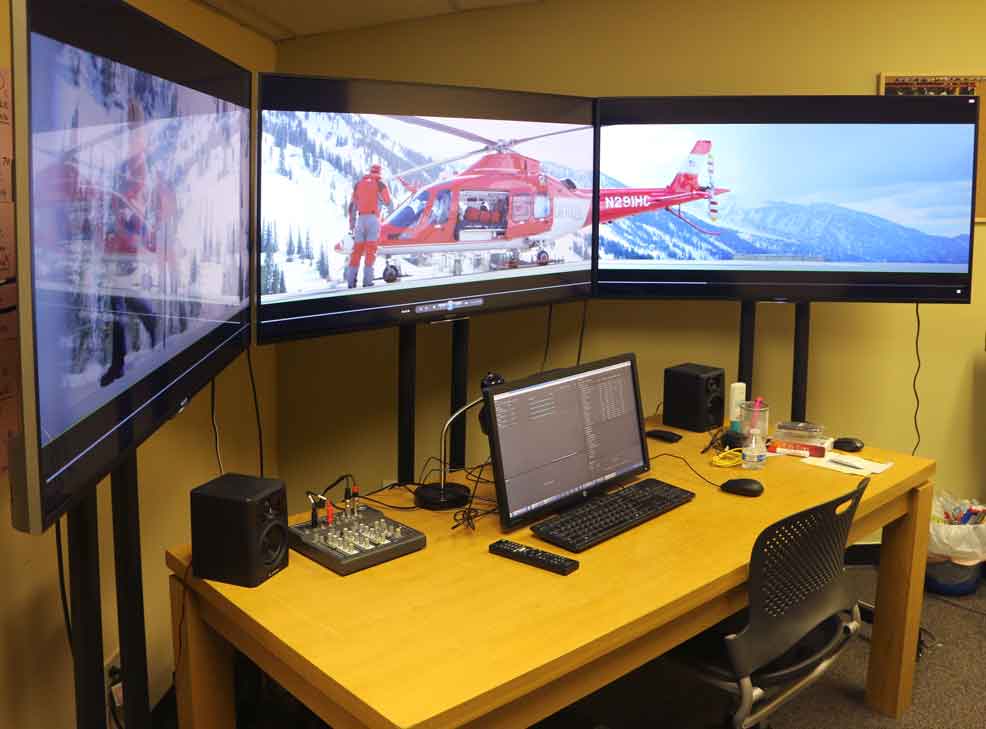
6K Editing Hardware and Performance

      3 Comments on 6K Editing Hardware and Performance

In setting up the post-production “ecosystem” for 6Below, the first step was to figure out how much storage we would need, to keep all of the 6K footage online. Unlike our previous 50 camera productions, having only 2 Red Dragons available limited the amount of footage that was shot to reasonable levels. We initially planned for 6K wide at 8:1, which is 73MB/sec. This is 4.4GB/min or 265GB/hr, and 2hrs/day for 30 days results in 16TB of footage. So I bought a 32TB SAS array from ProAvio, the 8 spindle EB800V2, which provided over 1GB/s to my main edit system. All of these calculations, including the critical 60 hours of footage estimate were right on, but they ended up deciding to shoot at 4:1 instead, doubling the data rates and file-sizes. Needless to say, we purchased another ProAvio RAID, twice as big, before we were done shooting. This ended up being a blessing, in that it gave us local storage options on both systems, so we could render from one to another, and back, for maximium performance. We could have survived with a 2nd 32TB array, but upgrading to 64TB was worth the price, and will be useful on our next project, whatever that is.
Continue reading
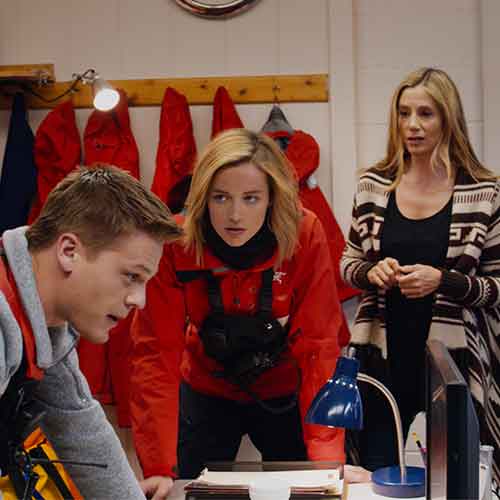

6Below Editing Workflow

      1 Comment on 6Below Editing Workflow

I have been working on a project currently titled 6Below, which is the first full length feature film to be created in the Barco Escape Format.  Escape is three adjacent 2K projections, so a total of a 6K wide image. We shot for this with a single camera, the Red Epic Dragon at 6K, and extracted the individual 2K windows from there. While the finished output for Escape is 6144×858, because we also have deliveries for 4K theatrical and UHD, we edited and colored the 6K-WS sized 6144×2592 files in their entirety. All VFX and other work was done at full 6K as well. From that media, we created three separate extractions at 6144×858, 4096×1484, and 3840×2160. Escape uses all of the available width, and UHD uses most of the available frame height, so each version had to be framed and titled in separate passes. This was all accomplished in Adobe Premiere Pro (9.2 to be precise) through various project stages.
Continue reading

Barco Escape

      1 Comment on Barco Escape

There are a number of proprietary theatrical formats that have been released over the last few years, to get people back into theaters, and away from their 4K BluRay players or whatever at home. IMAX is the most well known longstanding brand in that regard, but has been watered down from its original 70mm immersive format to just a bigger screen. Dolby3D and RealD are part of this movement as well, followed more recently by Dolby Cinema for HDR. There are also options like D-Box, ATMOS and others to add to the theatrical experience. One more option that has begun to appear, without too much notice is Barco Escape.
Continue reading

Welcome to the new Tech With Mike First

      No Comments on Welcome to the new Tech With Mike First

I am relaunching my technology site with a new brand and domain: techwithmikefirst.com. After nine years of posting my articles on HD4PC.com, it is time for a change. The identity HD4PC was chosen for a number of reasons, being simple and easy to remember, it encapsulated exactly what I wanted to talk about. I dealt with high end video production, and HD was where everything was at back then. And as an engineer at heart, I have always been a fan of PC over Mac, even when that made me a minority in the post production world. Therefore, HD4PC made sense as a brand for my work, but HD is old news these days, with 4K being the new big thing, and my current project is posting in 6K. At the same time, the technology field is broadening, with the advent of VR workflows and such.
Continue reading

IBC 2016 News

      No Comments on IBC 2016 News

There have been a number of interesting announcements at IBC this last week.  Adobe has announced a slew of improvements to the various apps available on Creative Cloud.  The most significant of which will be Team Projects, when it is released.  Team Projects will be asset groups shared between multiple cloud users, with version control and  conflict resolution for sequences, to keep editors from overwriting each other’s work.  It also creates a project archive, to find and restore previous versions of edited sequences, without manually versioning project files.  It appears it also will break down the bloated project file into individual sequences, coming from a shared asset pool that can maintain unique file paths for each user.  This will greatly improve media management in collaborative environments, which has traditionally been an issue with the existing architecture.  Adobe was also showing off new captioning tools, improved color correction options, and a new visual shortcut editor in Premiere Pro.  They have fleshed out the workflows for HDR and VR content, which were both announced at NAB earlier in the year, but with minimal features.  When editing VR experiences, multiple camera angles can now be stitched into a single file on ingest, instead of that step being done beforehand in a 3rd party application.  After Effects is getting more true 3D capabilities from Cinema 4D technology, and will now be able to playback certain assets in real-time without caching frames.
Continue reading

Graphics News

      No Comments on Graphics News

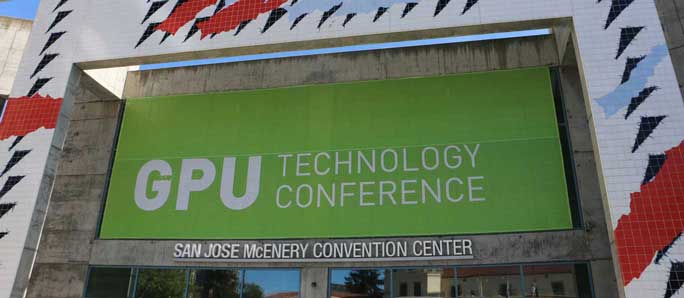
Since GTC, NVidia has been rolling out a new Pascal based card every month, starting with the GTX1080, followed by the reduced 1070 and 1060, and then topped by the new Titan-X (Pascal). They followed that by releasing mobile versions of the 1080, 1070, & 1060 under the same names, which is only forgivable because they have roughly comparable specs to the desktop versions. (Unlike the Mobile 980, but not to be confused with the weaker 980M, which had no link to the desktop 980.) While NVidia has cleaned up some of the mess they made in mobile GPU naming conventions for the last generation, they turned around and released a new Titan card that is totally different from the Maxwell one, with the exact same name: Titan-X. On the Quadro front, at least the new P6000 makes sense for the Pascal generation.
Continue reading

NAB 2016 Wrapup

      No Comments on NAB 2016 Wrapup

We see ourselves in a place where UHD has become pretty ubiquitous, and can be recorded and viewed on a cell phone.  So the natural question is: what next?  One approach is to pursue higher resolution, with 6K and 8K capture options.  Another is to smooth out motion by increasing the frame rates to 60 or 120 frames per second.  Separately we can increase bit depth and color range to allow HDR imaging.  Sony has definitely focused on that last approach, and is showing off all sorts of HDR displays, with some pretty impressive demos.  Digital imaging technology has greatly improved in that regard recently, but I still have not wrapped my head around how all of the new HDR developments relate to one another.  They are also pushing IP based video solutions, in conjunction with Evertz Aspen standards, and their own IP Live branding.
Continue reading

NAB 2016 Announcements

      No Comments on NAB 2016 Announcements

NAB opens this morning, and as usual, there are all sorts of new announcements to sort through. First off, HP announced a significant change to their Z1 All-In-One workstation. The Z1 Gen3 now offers a 24″ 4K screen, much smaller and lighter than the 27″ of previous generations. It has 2 Thunderbolt3 ports, and dual M.2 slots for fast storage. I can definitely envision this being used on-set by media managers and DITs. The biggest limitation that I see is that the GPU is limited to the Quadro M2000M, with only 640 cores. My laptop has twice that many. Why upgrade from a laptop if not for more GPU power? HP also announced that their high performance Remote Graphics Software can now be used to stream your workstation power to OSX users.
Continue reading

The Value of Freedom

      No Comments on The Value of Freedom

I am planning to direct and produce a documentary on freedom.  It will present freedom as the opportunity to experience the natural results of your own decisions, and make the case that freedom is more important than life itself.  It will examine freedom from political, economic, philosophical, and spiritual perspectives.  The production has a production blog at http://www.sharethevalueoffreedom.com as well as a Facebook page, where you can find more info.  The current focus is our Kickstarter campaign, trying to raise $20,000 for the production by the end of the month.  Be sure to check it out, and share it with anyone you think might be interested.